
PhyDrawGen: AI Learns to Generate Physically Realistic Diagrams
New research demonstrates AI systems that can generate physics-respecting diagrams from natural language descriptions, combining visual reasoning with physical understanding.
30 articles · updated daily
New research demonstrates AI systems that can generate physics-respecting diagrams from natural language descriptions, combining visual reasoning with physical understanding.
Researchers debate whether language models can exhibit psychosis-like behaviors, challenging how we understand AI failures and mental health.
Nvidia releases Cosmos 3, an open foundation model trained to understand physical world dynamics, enabling AI systems to reason about how objects move, interact, and respond to actions.
Nvidia announces RTX Spark, its most power-efficient GPU for Windows PCs, designed to handle AI inference and generation tasks locally without cloud dependency.
OpenRouter, a unified API layer for accessing multiple LLMs, raises $113M Series B to expand its model marketplace and infrastructure for routing requests across competing providers.
Meta is reportedly developing a wearable AI pendant that clips to your clothing, offering hands-free access to an AI assistant without requiring your phone or smartwatch.
GitHub introduces token-based billing for Copilot, shifting from seat licenses to consumption-based pricing, signaling how AI tools will be monetized as they become commoditized.
Stratechery's latest analysis: Anthropic's Claude is winning on technical merit and user trust, forcing OpenAI to rethink its product strategy and positioning.
As robotics companies develop AI-driven robots, they're increasingly collecting video footage of everyday human activities for training data—raising privacy and consent questions.
A practical guide to essential AI terminology—what hallucinations actually are, why tokens matter for costs, and what terms like 'agentic' and 'RAG' mean for working with models.
Software developers increasingly refuse jobs without AI-assisted coding tools, reshaping how companies compete for technical talent and raising questions about code quality and vendor lock-in.
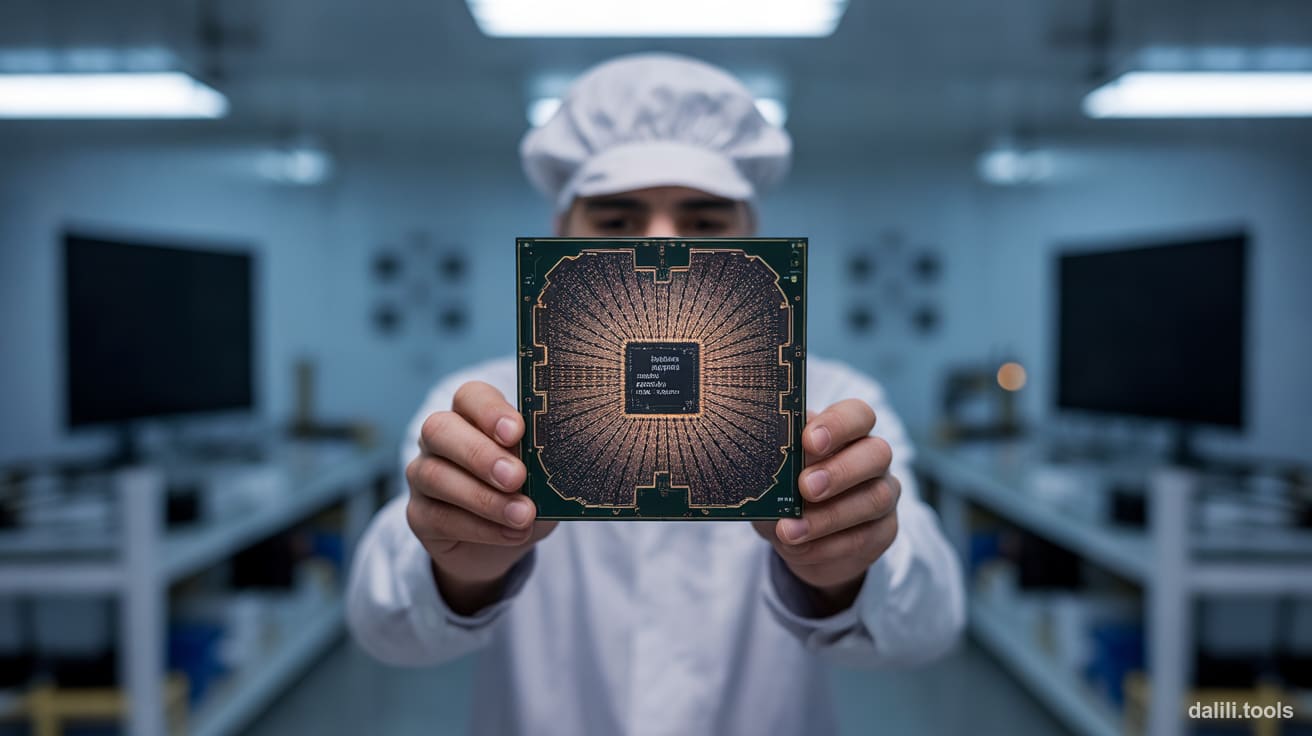
Nvidia, Microsoft, and Arm announce the N1X, a new laptop processor designed for on-device AI inference, signaling competition heating up in edge computing.
Microsoft releases updates to Copilot emphasizing performance gains and a leaner interface, signaling a shift from novelty to efficiency in enterprise AI deployment.
A creative workaround emerges for prompt injection attacks: developers are embedding protective logic directly into system prompts, treating defense as a first-class citizen.
As AI agents proliferate, infrastructure is quietly shifting. The web is being optimized for machine-to-machine communication, changing how data flows and who controls the network.
New research reveals that large language models double down on incorrect information even after explicit warnings, exposing a fundamental limitation in their reasoning architecture.
Glean's search platform crosses $300M annual revenue, validating enterprise demand for AI-powered knowledge retrieval in corporate environments.
Researchers discovered that Google's advanced AI models frequently misspell common words, exposing a gap between reasoning capability and linguistic precision.
A former Google employee is under investigation for allegedly using proprietary AI knowledge to gain an unfair advantage in a high-stakes poker tournament.
Nvidia commits $150B to Taiwan production, contradicting US government efforts to relocate chip manufacturing domestically.
Snowflake announces a multi-billion dollar commitment to AWS, deepening integration and signaling consolidation in the cloud data platform space.
Researchers discovered that Google's advanced AI models frequently misspell common words, exposing a gap between reasoning capability and linguistic precision.
OpenRouter, an LLM routing and load-balancing platform, has doubled its valuation in a funding round that signals investor confidence in the emerging market for model-agnostic API abstraction layers.
Security researchers discovered a critical vulnerability in widely-used AI agent frameworks that could allow attackers to compromise systems depending on agentic AI for decision-making and automation.
DuckDuckGo reports 30% growth in installs as users increasingly seek alternatives to algorithmic tracking and personalization-driven search results.
The Vatican's use of AI to help articulate religious doctrine raises questions about authority, authenticity, and the role of human judgment in spiritual teaching.
EAGLE 3.1 represents collaborative advancement in AI inference optimization, combining research from multiple teams to accelerate language model serving.
MIT Tech Review examines exaggerated claims about AI-driven unemployment, finding historical evidence suggests workforce transformation, not elimination.
ClickUp's recent workforce restructuring through automation sends a powerful signal about AI's impact on labor markets and corporate decision-making.
Nvidia's latest earnings underscore its commanding position in AI compute infrastructure, as demand for GPUs accelerates the generative AI arms race among tech giants.