
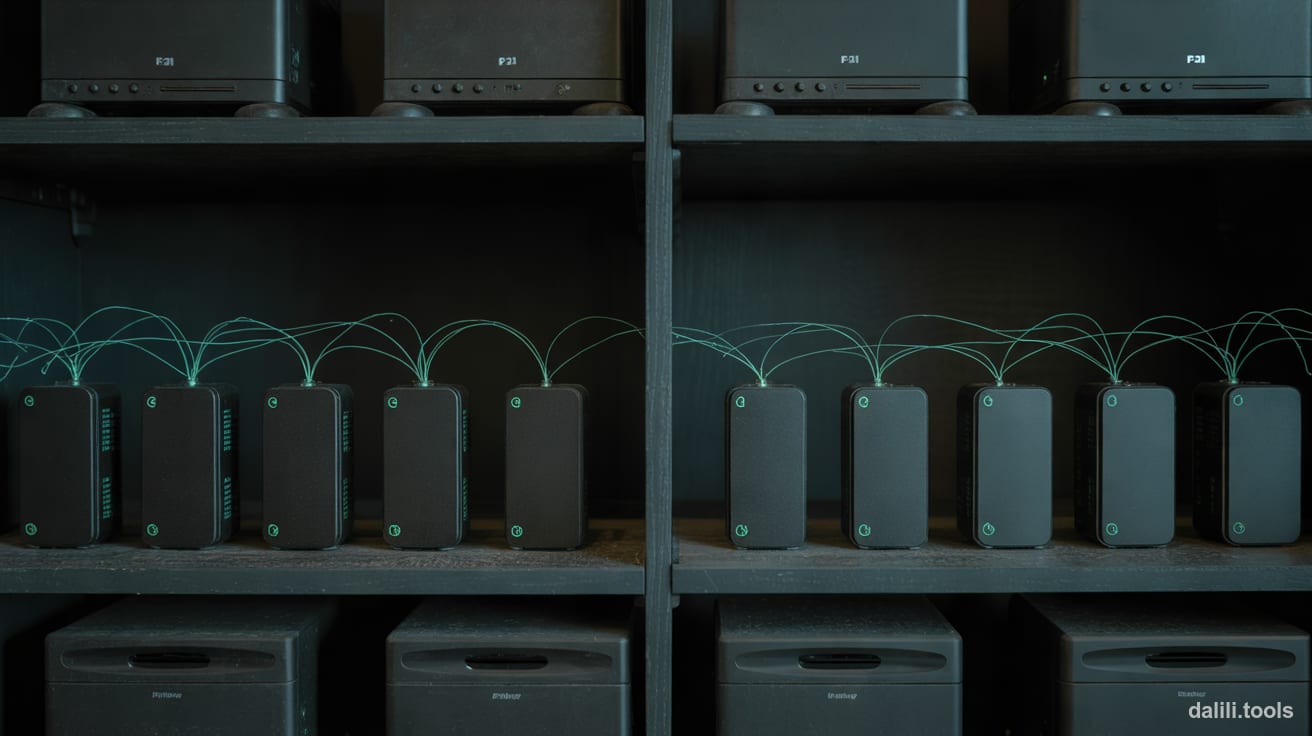
AI company Anthropic is warning that advances in small AI models could usher in a new era of self-replicating malware capable of infecting smart fridges, vacuum cleaners and a wide range of Internet of Things devices. The company's research describes small weight-based replicators that could propagate across IoT hardware without requiring human interaction.
In experiments, Anthropic researchers ran small open-weight models on real or simulated low-cost Android TV boxes and other IoT hardware. The lightweight Gemma4-26B-A4B model required just 15 boxes with 4GB of memory each to achieve inference. The Qwen3.5-9B model was able to configure other language models on eight of nine hardware types tested, adapting on the fly to unfamiliar devices without pre-written malware.
Unlike traditional malware that must be written for specific hardware, these AI models could use their weights to make configurations dynamically. Anthropic warned that such a replicator would be challenging to shut down since there is no centralized point to turn off, and it could figure out unfamiliar devices autonomously. The model weights would effectively become part of the malware payload itself.
The company notes that no lightweight model tested has yet achieved full end-to-end replication. The process remains slow, with the Gemma model distributed over 15 boxes performing at just 0.39 tokens per second. However, Anthropic says 30-billion-parameter models can already complete many individual replication steps, and if current improvement rates continue, small weight-based replicators may become possible soon after the end of 2026.