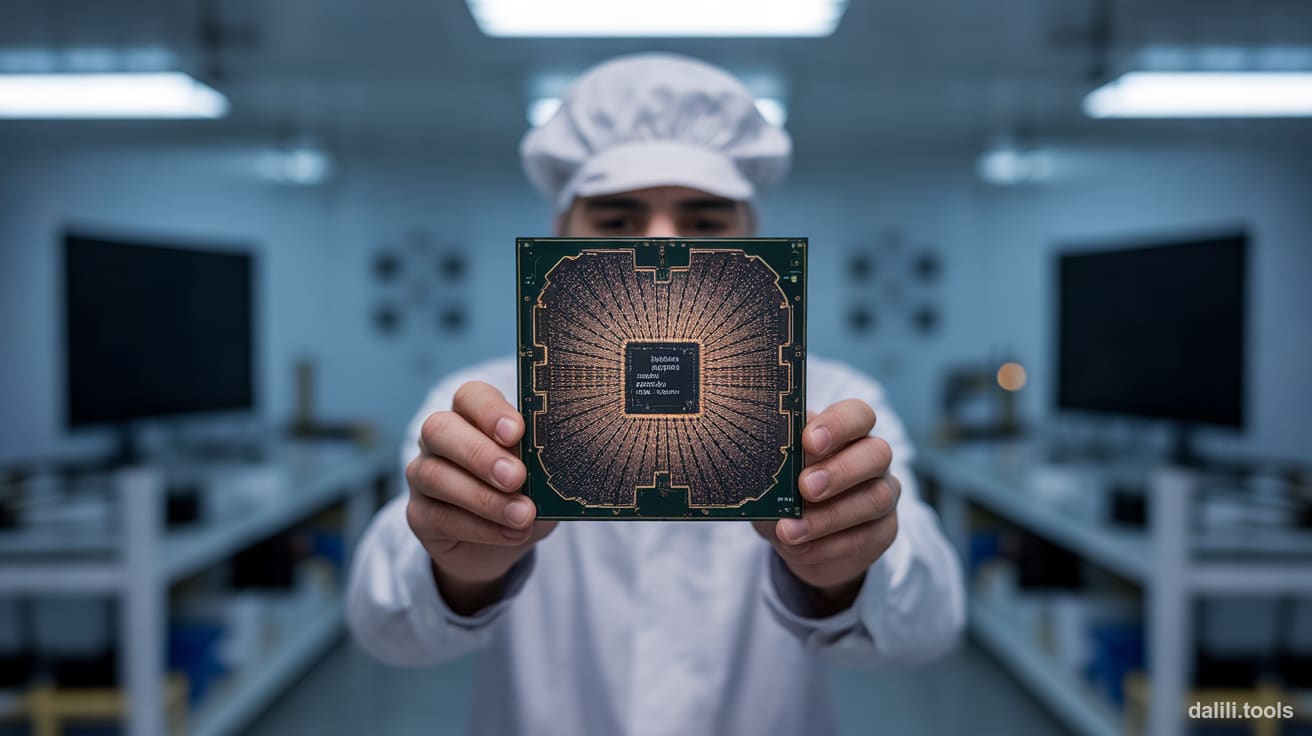
Ricursive Intelligence founders Anna Goldie and Azalia Mirhoseini took the stage at TechCrunch Disrupt to detail how their startup is developing AI that can design chips, learn from each iteration and improve subsequent designs, automating and accelerating the entire chip design process.
Goldie projected that compute demand will grow at least 10,000 times in the next five years, calling that estimate potentially conservative. She argued the industry cannot simply build 10,000 times more data centers and must instead make chips that are more efficient in their use of bandwidth, wafers and fabrication capacity.
The pair previously developed AlphaChip, the AI system that produced a circular donut-shaped arrangement of chip components that initially surprised engineers but proved successful. Now they are optimizing entire chips rather than partitioning them into dozens of smaller blocks, allowing AI to create intricate wave-like patterns that would be impossible with traditional methods.
Goldie argues that if chip design time compresses from months or years to roughly one week, it becomes financially viable to create custom chips for applications in space exploration, augmented reality, virtual reality and biological computing. She described a future where humans bring creative ideas and AI handles the execution across chip design, software development and other domains.