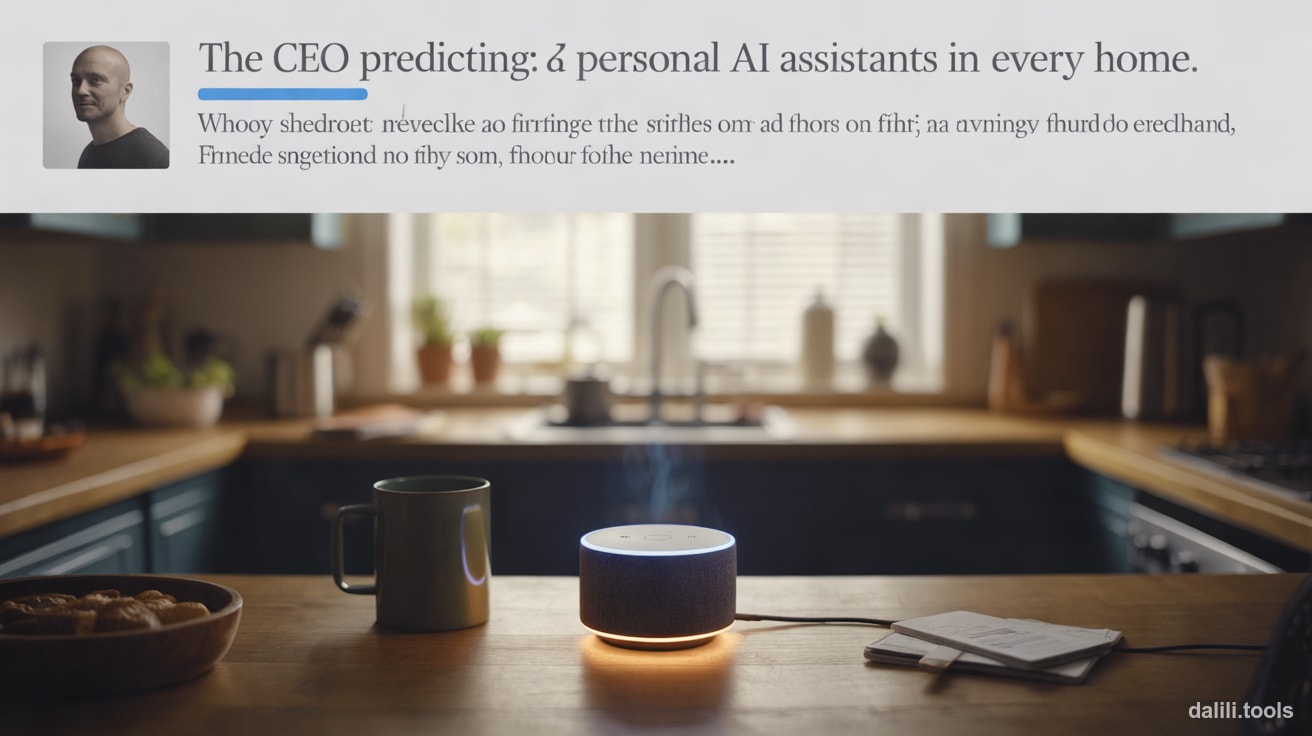
Cerebras Systems CEO and co-founder Andrew Feldman believes a personal AI assistant in every home is closer than most people realize. Speaking at TechCrunch Disrupt 2026 on Tuesday, the AI chipmaker executive said the shift is not a distant vision but an imminent one.
"Actually, I don't think that's very far away," Feldman said when asked what would need to happen for AI to become a home appliance. He pointed to advances in consumer AI agents — citing Meta's Muse and the startup Instinct, now valued at $10 billion — as evidence that AI is finding its footing with everyday users.
His prediction: personal AI assistants that run partly on local devices and partly in the cloud, similar to how smartphones work today. The on-device component would handle routine tasks and privacy-sensitive operations, while the cloud would kick in for heavier reasoning and model updates.
Feldman's vision rests on the assumption that inference costs will continue to drop and that specialized AI chips — Cerebras's core business — will make local model execution practical for consumer hardware. The company's wafer-scale processors are designed for training and running large models efficiently, and Feldman sees that technology trickling down to consumer devices.
The comparison to household appliances is deliberate. Just as washing machines and refrigerators became standard fixtures, Feldman argues that an AI assistant will become an expected part of the home — one that knows your schedule, manages your devices, and handles routine communication.
Whether consumers will welcome an always-on AI device in their homes remains an open question, but the industry is clearly betting on it.