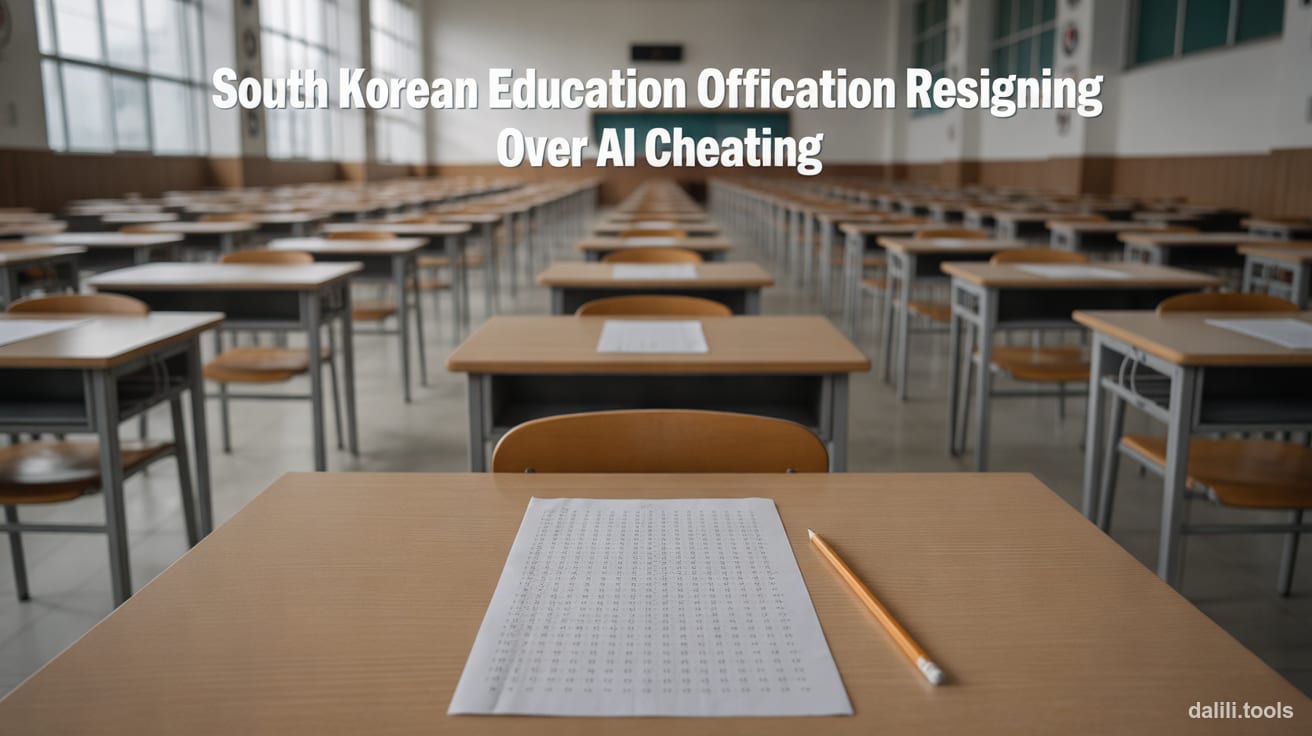
South Korea's education minister resigned on Saturday following a scandal involving AI-assisted cheating in the country's prestigious university entrance exams, an incident that has shaken public confidence in the integrity of academic assessments.
The scandal erupted when a top scorer in the College Scholastic Ability Test admitted to using illicit AI technology to achieve high marks. The student allegedly used an AI-powered device or application to receive answers during the exam, though specific details of the method remain under investigation.
The resignation of the education minister, who took political responsibility for the breach, marks the latest in a series of high-profile departures from South Korea's education leadership. The incident has prompted urgent reviews of exam security protocols and raised questions about how traditional assessment systems can adapt to the proliferation of AI tools.
South Korea's university entrance exam, known as the Suneung, is one of the most competitive and high-stakes tests in the world. Millions of students prepare for years, and scores determine access to the country's elite universities and future career prospects.
Education authorities are now scrambling to implement countermeasures, including enhanced monitoring, AI-detection systems, and revised exam formats that may reduce opportunities for technological cheating. However, experts warn that the rapid evolution of AI capabilities creates an ongoing challenge for assessment integrity.
The scandal has sparked broader debate about AI in education. While some argue that AI tools should be integrated into learning and assessment, others insist that core examinations must remain AI-free to maintain fairness and meritocracy.
This incident follows similar concerns in other countries, where educators are grappling with how to detect and prevent AI-assisted cheating while balancing the educational potential of these tools.