
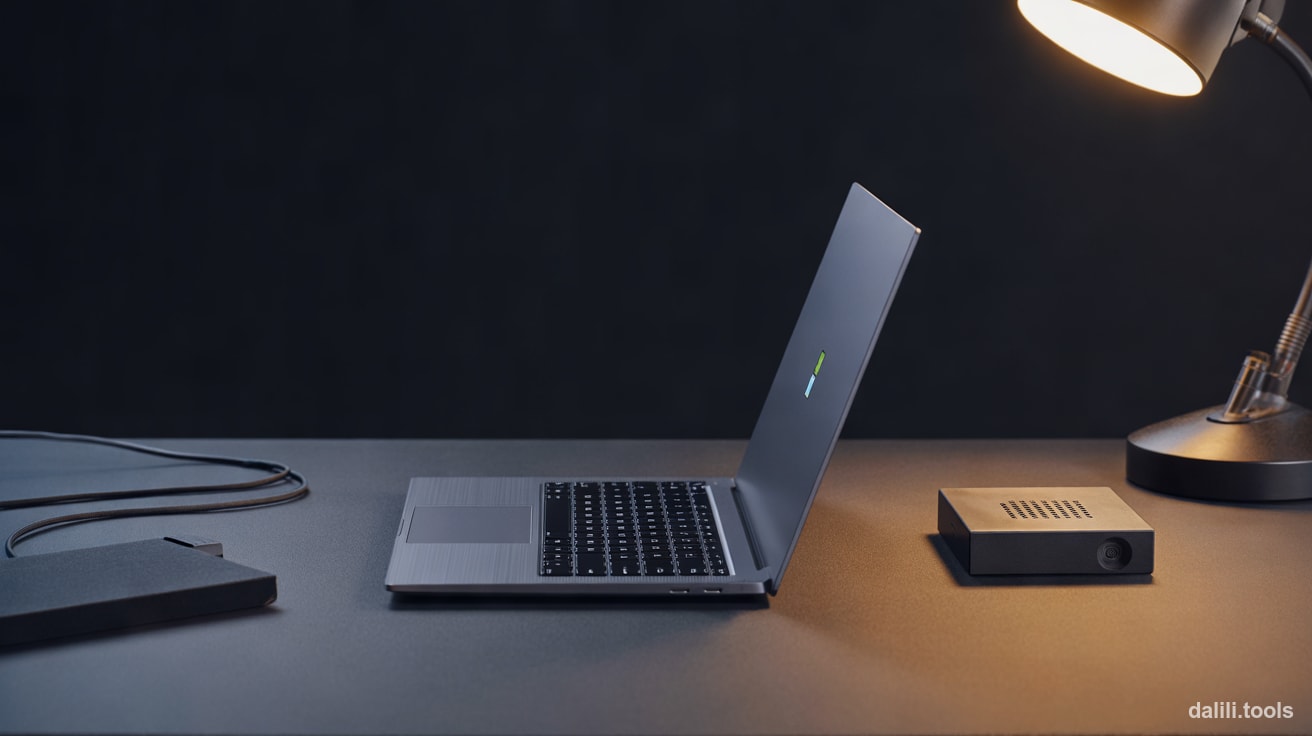
Microsoft staged its biggest hardware event in years on Tuesday, unveiling the Surface Laptop Ultra — the first laptop built around Nvidia's new RTX Spark system-on-chip — alongside a $5,999 desktop Dev Box aimed squarely at AI developers.
The Surface Laptop Ultra, originally teased in May, leans on unified memory architecture shared between the CPU and Nvidia's GPU to run large language models locally. Microsoft demonstrated the machine running inference on models that previously required a cloud connection, positioning the device as a bridge between on-device and cloud AI workloads.
The RTX Spark Dev Box is a compact anodized aluminum unit that physically resembles a game console more than a workstation. Nvidia CEO Jensen Huang joined Microsoft CEO Satya Nadella and Windows chief Pavan Davuluri on stage to highlight the device's graphical capabilities.
Beyond hardware, Microsoft outlined sweeping Windows 11 changes arriving this fall. Copilot is being restructured into three dedicated tabs and will gain the ability to execute system-level tasks — adjusting settings, managing files — directly from the search bar.
To address security concerns around giving AI deeper OS access, Microsoft introduced Execution Containers (MXC), a policy layer that routes compute to isolated backends depending on the workload. The company calls the overall strategy Hybrid Intelligence, a deliberate shift from cloud-only AI toward local-first processing.